UN Job Trends: From Expansion to Transformation
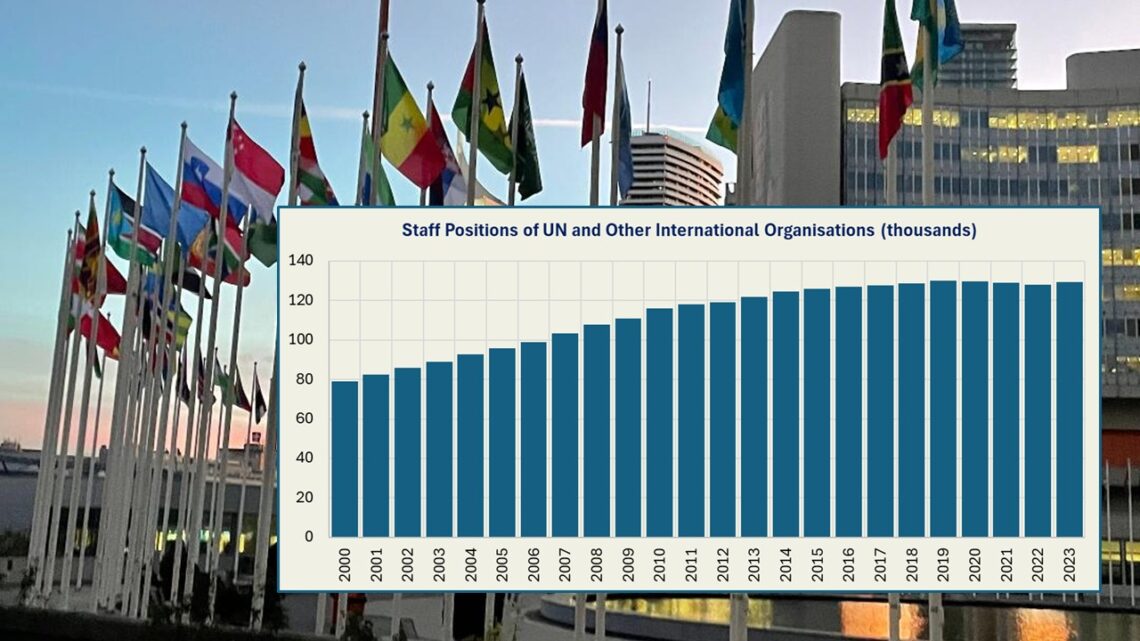
Since 2000, the timeline histogram clearly illustrates the significant expansion of the UN’s institutional workforce in the early 21st century and its subsequent stabilization into a large, complex system of around 130,000 core international and nationally recruited staff. How will it change in future?
There are two phases:
- Steady Growth (2000-2012): The number of active contributors grew dramatically from approximately 79,000 in 2000 to nearly 120,000 in 2012. This represents an increase of over 50% in 12 years.
- Plateau and Stabilization (2012-Present): Following the 2012 peak, growth plateaued. The numbers have oscillated within a narrow band of approximately 125,000 to 130,000 for over a decade. This reflects budget constraints and efficiency drives across the UN system.
The current situation is characterized by three driving forces:
- The United Nations is responding to a severe cash shortfall because many member states—most notably the United States—have failed to pay hundreds of millions in assessed contributions, forcing deep budget cuts and thousands of job reductions.
- Under Secretary-General António Guterres, a major reform agenda is underway, centered on a “Quintet of Change” to reposition the UN for the 2030 Agenda. This directly impacts workforce composition and size.
- Erosion of national support, specifically US government announcement on Jan. 7 to withdraw from 66 international and UN entities.
Future Trends & Projections
- Shrinking Core, Flexible Perimeter: The ~130,000 pensionable staff will shrink. Around it, a “flexible perimeter” of contingent labor (consultants, temporary appointments, partners) will ebb and flow with mandates and funding.
- Skills-Based Hiring Over Pure Experience: Future vacancies will increasingly emphasize demonstrable competencies in digital, data, innovation, and climate action over years of experience in a narrow sector. The UN’s new People Strategy 2024-2027 explicitly focuses on this.
- Growth in Specific High-Demand Areas: Despite the overall plateau, targeted growth is expected in Climate & Environmental Sustainability, Digital Governance & AI, Crisis Prevention & Complex Emergencies.
- Increased Internal Competition for Posts: As external hiring slows and mobility is enforced, competition for desirable posts (especially at headquarters or in stable duty stations) among existing staff will intensify.
For a job seeker, this means:
* Focus on acquiring the “future skills” highlighted in UN strategy documents.
* Understand that securing a permanent (fixed-term) contract is becoming more competitive, while opportunities for specialized, short-term consultancies may grow in specific high-demand fields.
* Be prepared for field experience and mobility as a near-requirement for career advancement.
Peace Science Collaboration offers mentoring and coaching for experts following a career in the international environment. Select your coaching service here.
Make a comment to share what you think about the trends and challenges for a career in the UN and international organizations.
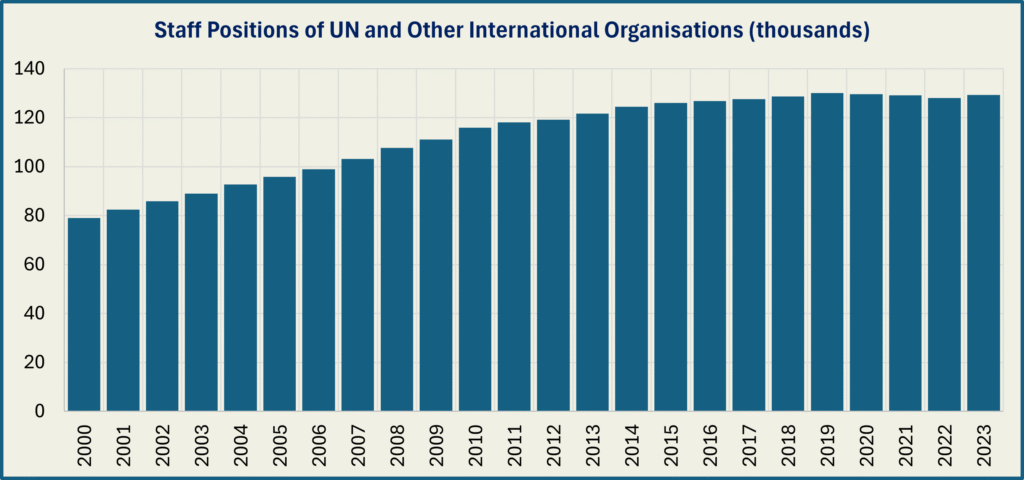
Source: Staff data is taken from UNJSPF Annual Reports (2000-2023), primarily from the “Participant Data” tables in the appendices of each report. “Active Contributors” are staff on contracts that qualify for pension contributions (typically appointments of one year or more). This is the best single metric for the core, ongoing professional workforce of the UN system.


You May Also Like
Physicist at an international organisation