International Control Converges on Fusion Energy Startups
International control of fusion technologies is not as prominently spotlighted as that of fission reactor technologies—but that does not mean it is irrelevant. Compliance procedures for fusion reactors are generally more straightforward than for fission-based nuclear power plants. However, fusion ventures are entering new regulatory terrain, which introduces uncertainty. Meeting international obligations will need to be demonstrated in national licensing applications.
Key Areas of Regulatory Attention
1) IAEA Nuclear Safeguards
Fusion reactors do not fall under International Atomic Energy Agency (IAEA) nuclear safeguards per se, as they do not use uranium or plutonium. Although lithium-6 and tritium are technically usable in nuclear weapons, they lie outside the scope of traditional safeguards. Nonetheless, international control mechanisms are evolving to address fusion power plants.
If a country has ratified the Additional Protocol to its nuclear safeguards agreement with the IAEA, the Agency gains expanded access rights. Under this protocol, the IAEA may request “complementary access” to a fusion facility—not to safeguard its routine operations, but to “assure the absence of undeclared nuclear material and activities.” To facilitate such inspections, it is advisable to adopt a “safeguards by design” approach.
What complicates matters for tritium-using fusion devices is that tritium is explicitly listed in Annex I of the Model Additional Protocol, which defines activities that must be reported under Article 2.a.(iv).
2) Strings Attached to Tritium Supplies from Abroad
Fusion concepts based on deuterium-tritium reactions require a startup inventory of several hundred grams of tritium, typically sourced externally. If imported, an import license is required, and the supplier may impose verification procedures for the declared end use. This could include tritium accountancy protocols.
Tritium is radioactive, mobile, and subject to strict inventory controls. Yet current measurement methods—such as batch calorimetry adapted from fission facilities—carry uncertainties of 2–10%. While this may suffice for research, commercial facilities handling kilograms of tritium annually will require significantly lower uncertainty margins.
3) Technology Import/Export Regulations
Not only tritium itself, but also tritium handling systems, target assemblies, and components for tritium production—as well as lithium-6 and related technologies—are explicitly listed on the dual-use control list of the Nuclear Suppliers Group (NSG).
Even non-tritium fusion approaches are affected, as enabling technologies may fall under dual-use controls, including:
- Radiation-resistant materials
- High-temperature structural alloys
- Specialized neutron diagnostic equipment
- High-power laser systems (for inertial confinement fusion)
National nuclear regulatory frameworks vary, but most align with the international norms established by the NSG.
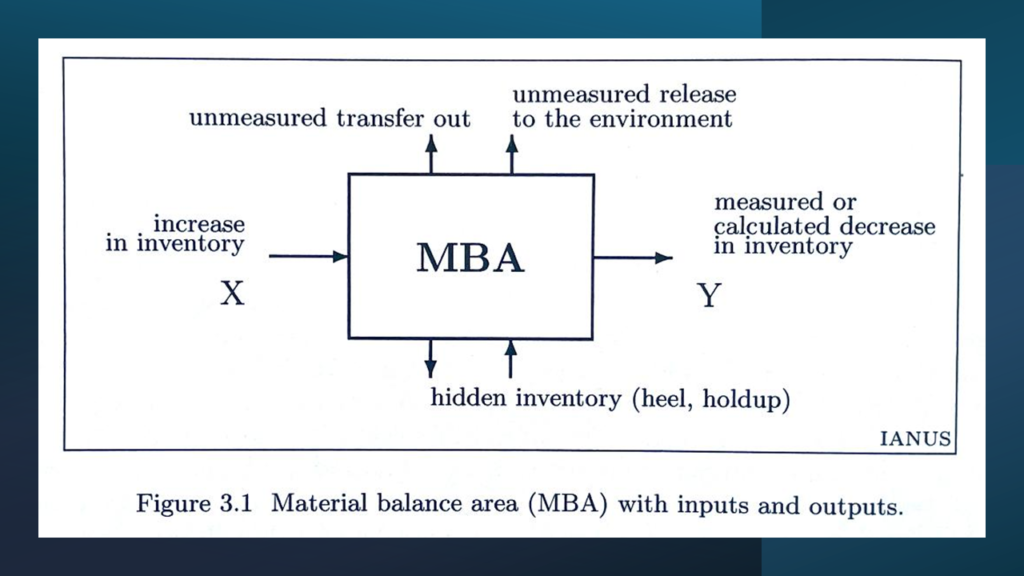
Image taken from Kalinowski, M.B. (2004). International Control of Tritium for Nuclear Nonproliferation and Disarmament. CRC Press.
The current nuclear regulatory framework is not yet fully adjusted to fusion power technologies, and this creates uncertainty. Regulators and startups are converging on key questions—such as: How will we know exactly how much tritium is in the system at any given time?
Industry and regulators are working toward accepted standards for:
- Real-time inventory monitoring
- Material balance areas designed for tritium breeding environments
- Protocols to account for tritium retained in structural materials
The good news: these are solvable engineering challenges. But they must be addressed during the design phase, not after construction begins.
Startups are navigating a landscape where license applications will be judged against evolving expectations. Regulatory bodies are actively developing procedures in cooperation with industry and international experts. The companies that succeed will be those that demonstrate not only a safe machine, but also a credible system for:
- Tracking radioactive materials
- Facilitating IAEA Complementary Access, if applicable
- Managing import/export regulations
- Maintaining records that satisfy both current rules and future requirements
Host countries will expect facilities to be transparent, accountable, and aligned with international norms.
Startups that begin designing for these requirements today will enjoy a smoother licensing path, a stronger position with investors, and a head start in earning the public trust that every new energy source ultimately depends on.
Peace Science Collaboration offers assistance in this process under the leadership of Martin Kalinowski.
Got interested?
Send a quick note and we will arrange for an informal chat to explore common interest.
Dr. Martin B. Kalinowski is a nuclear verification scientist and tritium accountability specialist. His first work on tritium in fusion power plants dates to 1992. In 2004, he published the foundational monograph International Control of Tritium. From 2006 to 2012, he collaborated with the IAEA as a university professor, including as consultant on “Safeguard Challenges in Connection with Magnetic Fusion Power Plants.” Since 2012, he has led scientific methods development and training for national authorities at an international organization. He now advises fusion companies on regulatory readiness and accountability architecture.


You May Also Like