Radionuclides
-
New Era for Tritium Trade
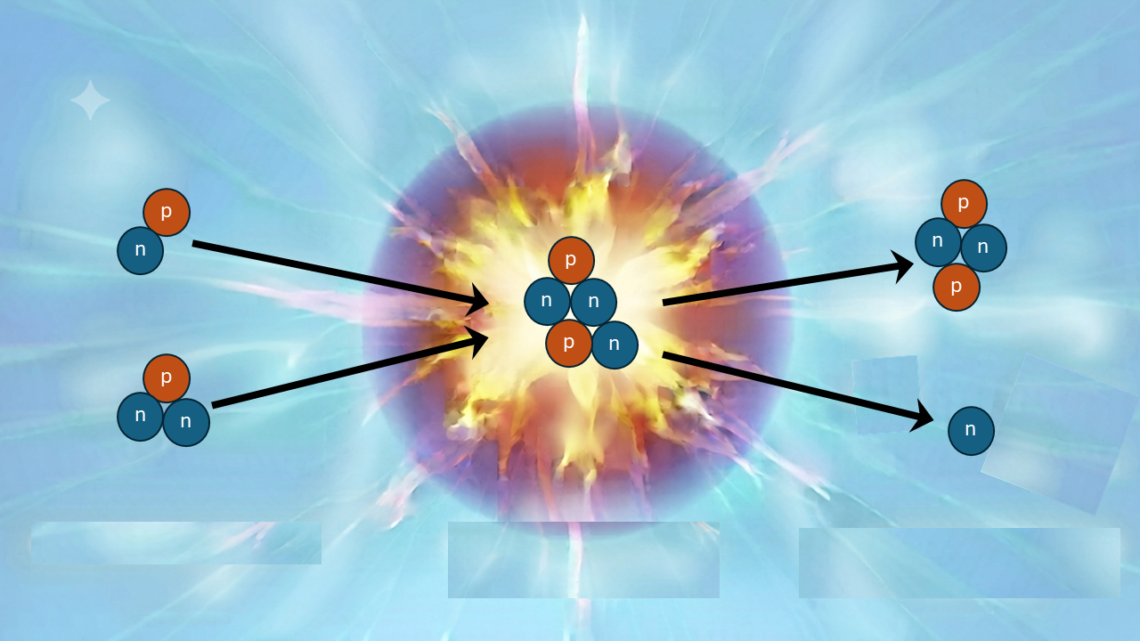
From Untapped Stocks to High Production Driven by Fusion Startups. For decades, the global tritium market has been a quiet, almost invisible niche. Civilian demand remained at a few hundred grams per year, supplied mainly by Canada’s heavy‑water reactors. Fusion startups are now poised to change this landscape entirely. The world is entering a period in which tritium demand will increase by two orders of magnitude. Decades‑old civilian stocks will be drawn down, and new production capacity will be required to support the emerging fusion industry. This post summarizes key findings and expands on themes previously discussed on the Tritium Matters Working Group (TMWG) homepage. Fusion startups: the new drivers…
-
Borders in the Sky: How Radioactive Venting Tested the Limited Test Ban Treaty
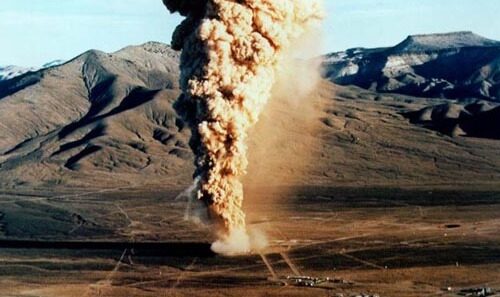
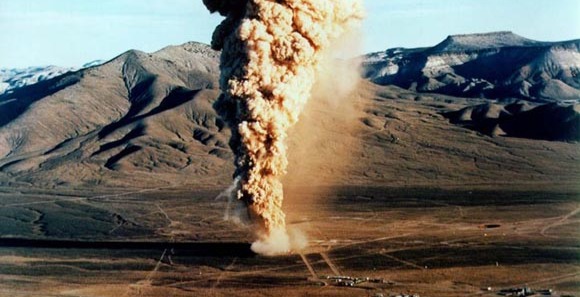
Introduction The 1963 Limited Test Ban Treaty (LTBT) marked a historic milestone in international arms control, seeking to curb environmental fallout by forcing nuclear testing underground. However, early underground programs demonstrated that preventing volatile radionuclides from crossing national borders was far more technically complex than treaty signatories had anticipated. Key Facts: Limited Test Ban Treaty (LTBT) Transboundary Venting and Early Treaty Compliance Underground cratering experiments and containment failures repeatedly challenged the practical boundaries of LTBT compliance. As documented in comprehensive reviews of historic remote atmospheric radionuclide monitoring, nuclear debris from underground test venting and atmospheric releases was frequently observed in multiple countries across the whole hemisphere (Kalinowski & Trillo, 2025).…
-
Global inventory of Cs-137 from nuclear tests
The total activity of 137Cs discharged into the atmosphere by all 535 atmospheric nuclear explosions was around 1018 Bq. This is much more than from the Chernobyl and Fukushima accidents. For Fukushima, the amount of 137Cs released is estimated to be 1.2 × 10¹⁶ Bq and this is about 14% of the emission estimated for the Chernobyl accident (Steinhauser et al., 2014). Some of the 137Cs inventory in the environment has already decayed but the half-life of 30.04 years implies that a large portion persists. Today’s remaining ¹³⁷Cs inventory from atmospheric nuclear tests is on the order of 2–3 × 10¹⁷ Bq. A more precise estimate will be determined by a project…